
BIO 2026's Missing AI Conversation Is on the Partnering Floor
BIO 2026 will cover AI in R&D, clinical operations, patient engagement, and BD&L forecasting. The gap is meeting-level intelligence for partnering teams.
Next week, roughly 20,000 people will land in San Diego for BIO International Convention 2026. The partnering pavilion will open. The deal-making calendar will fill. BD teams will walk into meetings armed with slide decks they finalized the night before.
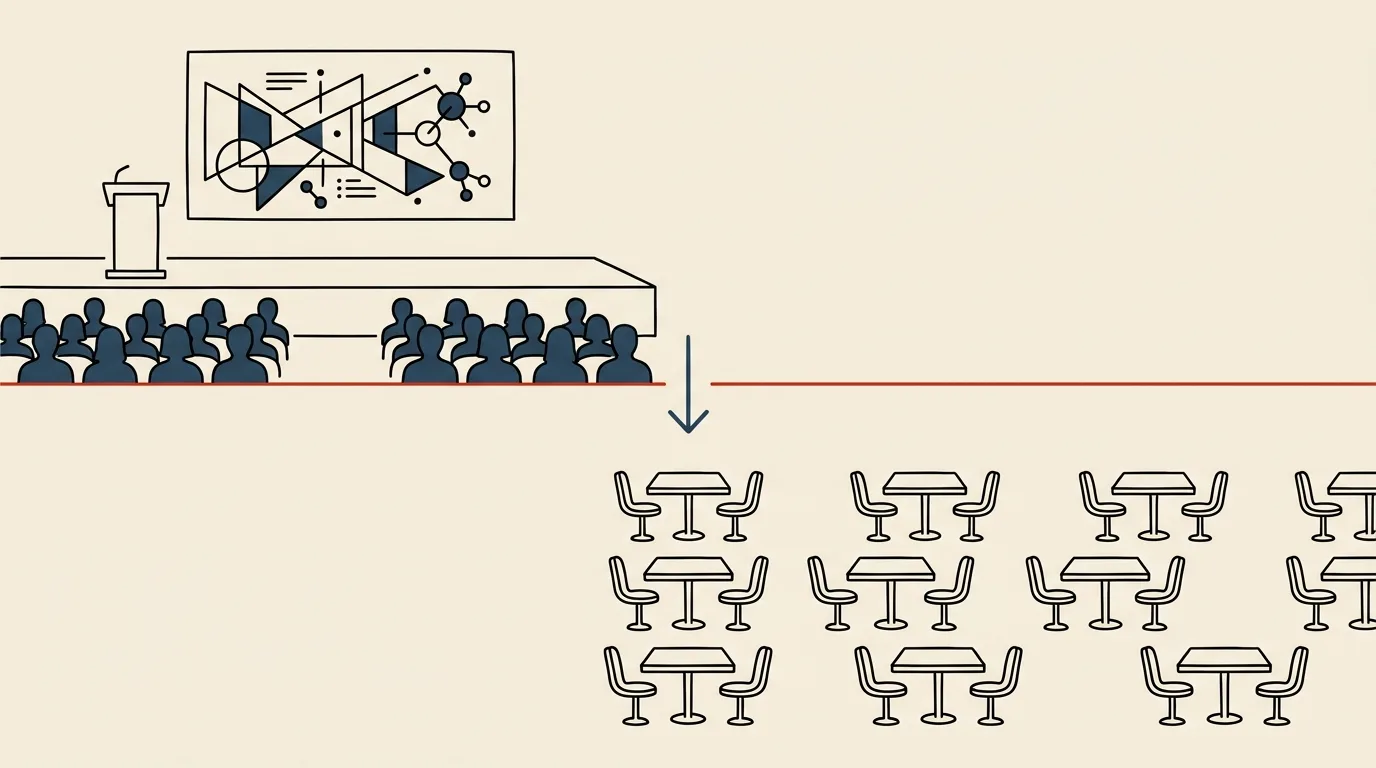
The AI Summit's headline session is titled "Beyond the Hype: How AI is Actually Transforming Biopharma in 2026." The stage will cover drug discovery, clinical trials, patient engagement, federated learning, and governance.
What it mostly will not cover is the meeting-level intelligence problem inside the partnering pavilion.
TL;DR: BIO 2026 has serious AI programming, but the most actionable gap is in the partnering workflow. The stage conversation is about AI transforming biopharma; the floor problem is whether BD teams can assemble account context, relationship history, recent signals, and meeting prep before each conversation. That is where commercial intelligence can change outcomes.
The agenda gap
I read the BIO AI Summit program and the broader BIO agenda. The AI Summit is centered on R&D, clinical operations, patient engagement, scientific collaboration, and governance. BIO also has a useful broader-program session on AI in commercial forecasting and BD&L.
That matters. It is also not the same problem as the one facing a BD professional with eight minutes between meetings. Forecasting helps decide which assets matter. It does not assemble account context, relationship history, recent signals, and negotiation prep right before the conversation starts.
| Stage AI conversation | Partnering-floor AI gap |
|---|---|
| Drug discovery and governance | What changed before this meeting? |
| Forecasting and BD&L models | Which signal should shape the next 30 minutes? |
| AI productivity | Did saved time become better prep and follow-up? |
BIO is fundamentally a deal-making conference. BIO says the convention brings together 20,000 industry leaders, and BIO News reported 35,000 scheduled partnering meetings as of June 8, with expectations of 70,000 or more by the end of the event. The AI conversation that would change outcomes on that floor is narrower than "AI in biopharma." It is commercial intelligence at the moment of meeting.
Where the data says the gap actually lives
BCG published an analysis in early 2026 of AI in biopharma that shows AI moving across the value chain, including R&D, operations, supply chain, field-force copilots, and sales-rep efficiency.
That is why the BIO gap matters. Commercial AI is on the map. But most examples are launch, HCP engagement, forecasting, or field-force productivity. The missing slice is partnering intelligence: who is across the table, what changed this week, what the prior relationship looked like, and what signal should shape the next 30 minutes.
A pharma BD lead walks into 30 partnering meetings. If that person has AI-assisted prep and the person across the table does not, the negotiation is asymmetric.
Why this matters more than the stage conversation
Gartner's 2026 survey of 210 CSOs and senior sales leaders found that AI tools save sellers 4.8 hours per week. But 72% of sales organizations report low reinvestment of those savings into high-value activities. That is the same operating gap behind the 72% admin tax.
During BIO week, that 4.8 hours is not a weekly average. It is a daily reality. The BD professional who spends 90 minutes the night before BIO reconstructing account context for the next day's meetings is losing time that should be spent on strategy and the actual conversation.
The ARIA thesis
I am building ARIA to close exactly this gap. Not another login, not another dashboard. A coordination layer that sits underneath the CRM and email the commercial team already uses, pulling account context, relationship history, and market signals from wherever they live.
The goal is not faster prep. The goal is unnecessary prep, because the intelligence is already assembled when it is needed.
The stage will cover AI that screens billions of compounds. The floor will still run on manual prep. For teams trying to turn BIO meetings into real opportunities, that may be the agenda that matters most.
Sources
- BIO, AI Summit Program
- BIO, AI in Commercial Forecasting and BD&L
- BIO, International Convention 2026
- BIO News, BIO 2026 Partnering Meetings
- BCG, Scaling AI in the Biopharmaceutical Industry
- Gartner, AI Saves Sellers Nearly 5 Hours Per Week
Update, July 2026: what the funding data now shows
We have since analysed every new biotech and pharmaceutical Form D filing from 2025 Q4 to 2026 Q2. Raise counts held steady (192, then 164, then 196) while total capital fell from $4.97 billion to $2.89 billion, and rounds above $50 million more than halved.
For anyone working a partnering floor, that reframes the room. There are as many funded companies to meet as a year ago, with much smaller budgets behind them, which makes knowing which ones raised, and how recently, worth more than working the room harder. Full method and figures: What 552 biotech Form D filings reveal about 2026 funding.