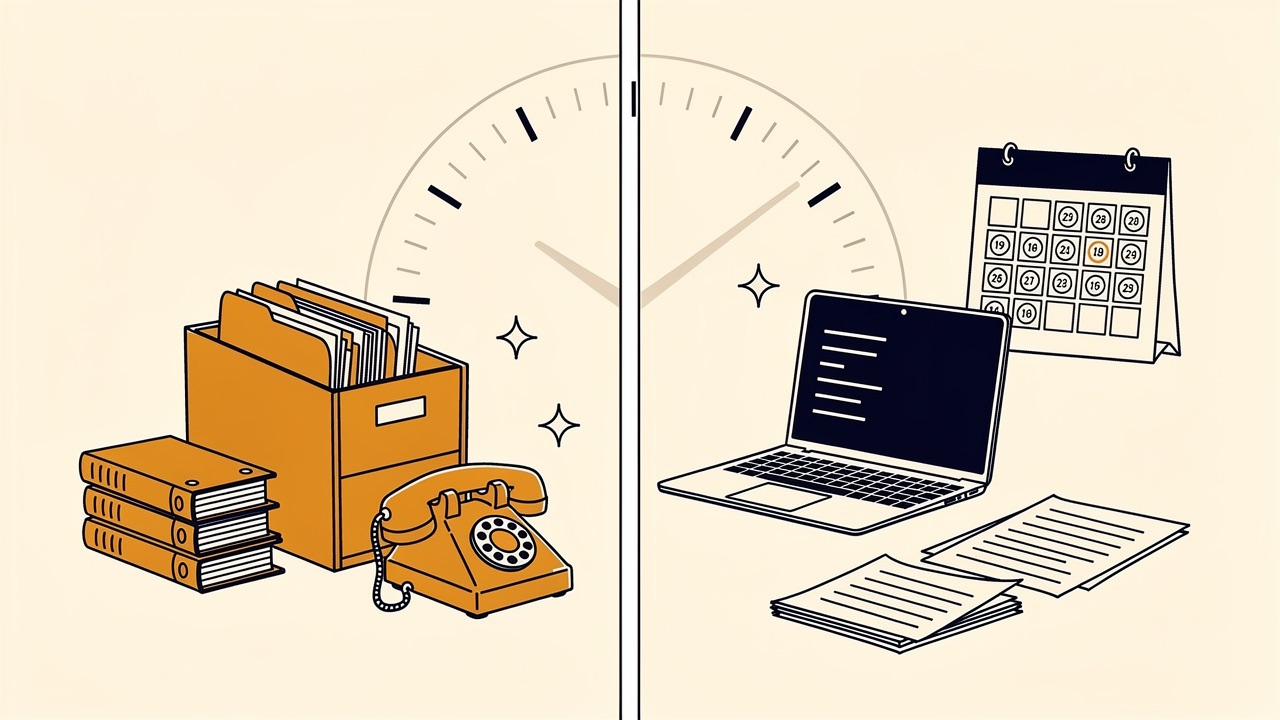
AI sales tools do not automatically free reps. They often save time inside one task, then send that time back into review, CRM updates, coordination, and follow-up decisions. That is the admin tax: the work around the work.
For biotech commercial teams, the problem is sharper. Field teams are small. Account context is fragmented. Every hour lost to notes, system updates, and internal coordination is an hour not spent with sponsors, sites, partners, or customers.
I keep hearing the same frustration from VP Sales at Series B, C, and D biotechs: "We bought the AI tools. Reps are using them. And I genuinely cannot tell whether we are spending more time selling."
They are not wrong to be confused.
Key takeaways
- Gartner found that AI saves sellers 4.8 hours per week, but 72% of sales organizations report low reinvestment of those savings into high-value sales activities.
- Time savings do not become revenue capacity unless leaders redesign the workflow around the saved time.
- Many AI sales tools automate a piece of admin while leaving review, CRM logging, handoffs, and prioritization untouched.
- The useful question is not "are reps using AI?" It is "did AI remove work and put time back into customer-facing selling?"
- Biotech commercial teams need a coordination layer that turns meeting context, account movement, and follow-up work into prepared action.
Why the 72% number matters
A Gartner survey of 210 chief sales officers conducted in early 2026 found that AI saves sellers 4.8 hours per week. The same Gartner release reported that 72% of sales organizations have low reinvestment of those time savings into high-value sales activities. Organizations that do reinvest AI-created time are 2.2 times more likely to exceed customer growth goals than organizations that do not. Gartner
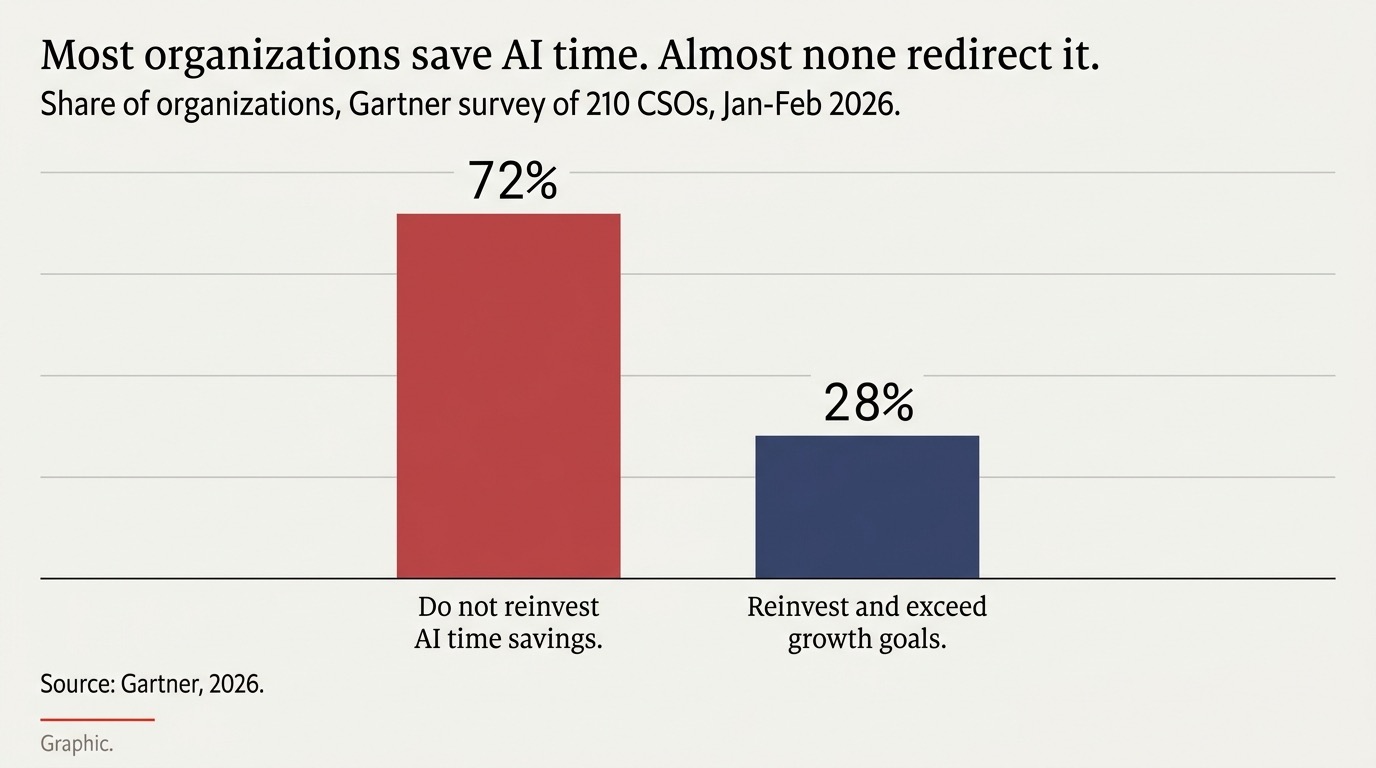
That is the gap. The time is being saved. It is not reliably being redirected.
In a small biotech commercial organization, 4.8 hours per seller per week is not a rounding error. On a five-person commercial team, that is roughly 24 hours per week. In theory, that could mean more sponsor conversations, better follow-up after medical or commercial meetings, faster account-plan updates, or more time spent understanding which relationship changed and why.
In practice, the hours often leak into the same old system maintenance.
Why AI tools are not moving the number
Most AI deployments add an interface without changing the workflow underneath.
A field rep who used to write call notes manually now uses AI to draft them. Then the rep reviews the draft, corrects the nuance, checks the CRM fields, decides what gets logged, writes the follow-up, updates the account plan, and reminds someone internally that the next step depends on a medical or procurement signal.
The note got drafted faster. The workflow did not get redesigned.
That is why admin survives. It changes shape.
BCG has made a related point in B2B sales: for every minute sellers spend with customers, they can spend nearly three minutes on behind-the-scenes tasks. The specific context was telecom B2B sales, but the operating pattern should feel familiar to any life sciences commercial leader who has watched a rep move from call to CRM to spreadsheet to Slack to email to meeting prep. BCG
The problem is not that sellers dislike tools. The problem is that the tools do not always remove the coordination work that sits between customer conversations.
What the 28% are doing differently
The 28% are not just buying better software. They are asking a better operating question first.
Not: which AI tool should we add?
Ask instead: which workflow should no longer exist in its current form?
That difference matters. If the workflow stays the same, AI becomes another assistant inside a broken sequence. If the workflow changes, AI can remove the handoffs that created the admin burden in the first place.
For biotech commercial teams, the target is usually not one isolated task. It is the chain:
- What changed in this account?
- What did the customer say?
- What signal matters?
- Who needs to know?
- What should happen before the next call?
- What should the human approve?
If AI only helps draft one item in that chain, the rep still owns the rest of the admin. If AI prepares the whole chain for review, the workflow starts to change.
The coordination layer that closes the gap
This is the problem ARIA is being built to solve for biotech commercial teams.
ARIA is not meant to be another destination app beside the CRM. The goal is a commercial intelligence layer that reads meetings, understands account context, surfaces what changed, and prepares the next action before the rep has to reconstruct the story manually.
That means fewer CRM update prompts. Less note review. Less end-of-day admin queue. Less time spent asking, "what happened with this account again?"
The goal is not faster admin. It is removing the admin loop where the system can safely do the work, while keeping a human responsible for what gets approved and sent.
For a small biotech commercial team, that distinction matters. A few recovered hours per rep per week can become more customer time, faster follow-up, and cleaner account execution without adding headcount.
What leaders should measure
Tool usage is not enough. A rep opening an AI assistant does not prove the organization got selling capacity back.
Leaders should ask four more direct questions:
Did customer-facing time increase?
If AI saves time but calendars still look the same, the time is being absorbed somewhere else.
Did follow-up get faster?
If meetings are summarized faster but next actions still lag, the tool helped documentation more than execution.
Did account prioritization improve?
If reps still decide where to spend time by gut feel, the AI is not changing the commercial operating rhythm.
Did CRM admin decrease?
If the rep still reviews, edits, logs, tags, updates, and reconciles the same data across systems, the admin tax remains.
The strongest AI implementations answer these questions with workflow evidence, not adoption dashboards.
The real test
The real test for AI sales productivity is simple: if you turn the tool on, does the rep spend more time with customers or just more time managing AI-assisted work?
That is the difference between productivity theater and commercial leverage.
If you are a VP Sales at a biotech and you cannot honestly tell whether your reps are spending more time selling after buying AI tools, that is the gap ARIA is built to close.
Sources
- Gartner, Gartner Survey Finds AI Saves Sellers Nearly 5 Hours Per Week, Yet 72% of Sales Organizations Fail to Reinvest Time in High-Value Activities
- BCG, GenAI Lets Telecom B2B Sales Teams Get Back to Selling
Building commercial intelligence for a biotech team that needs more selling time and less admin drag? Learn more about ARIA or connect with Dhruv on LinkedIn.